Spray at the roots: what's actually landing on your scalp
Share
– By Team Scalptures™. Formulated by a certified hair loss specialist, professional stylist and trichology practitioner.
You style. You spray. Then you catch your hairline in the lift mirror and wonder what you just put on your roots.
Fair question. A pomade mostly sits on the lengths. A spray goes straight to the roots, especially a sea salt spray. That's the point of it: lift where your hair meets your scalp.
So here's the straight answer from behind the chair, and what we look for on a label.
Does hair spray cause hair loss?
Research hasn't shown a direct link. No study has found that styling sprays directly cause hair loss, and Taiwan's Food and Drug Administration says styling products have no established link to it. But no direct link isn't a free pass. What goes on your scalp every day still deserves a closer look.
What many men do see is hair in the comb after a stiff, crunchy hold. That's often breakage along the strand, not hair loss from the root. Breakage and hair loss aren't the same thing. Here's the difference.
The everyday issue is residue. Use a lot of product, every day, and it builds up at the roots. That's why what you spray matters as much as how much.
Why a spray's label matters
It's about where the product goes. Most men work pomade through the lengths with their fingers. A spray lands at the root, every morning.
That doesn't make sprays risky. It means you're putting something near your scalp every day. So what's in it matters.
Most styling products are made for hold, with little thought for the scalp that wears them every day. We think you deserve better than whatever is closest on the shelf.
How to read a styling spray label
Three things to check. We leave all three out of every formula.
- Drying alcohol. Listed as "alcohol denat." or "SD alcohol". It helps a spray dry fast and set crisp. We leave it out.
- Silicones. Look for names ending in "-cone" or "-siloxane", such as dimethicone. They add slip and shine. We leave them out.
- Synthetic fragrance. Listed as "fragrance" or "parfum". We leave it out.
This isn't about scare stories. It's about knowing what goes on your scalp every day, and choosing.
"Alcohol-free" or "no drying alcohol"?
"Alcohol-free" usually just means no ethyl alcohol. "No drying alcohol" is the more precise claim, and it's the one we put on ours.
How to use a root lift spray on fine or thinning hair
- Use it on damp or dry hair. Both work.
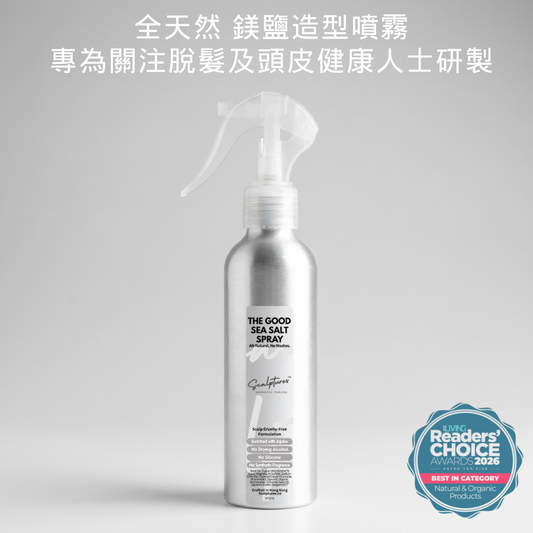
- Hold The Good Sea Salt Spray 15–20 cm away. Lift a section and mist the hair at the roots, rather than soaking the scalp. Four to six sprays is plenty.
- On damp hair, blow-dry while lifting at the roots with your fingers. On dry hair, just work the roots up with your fingers.
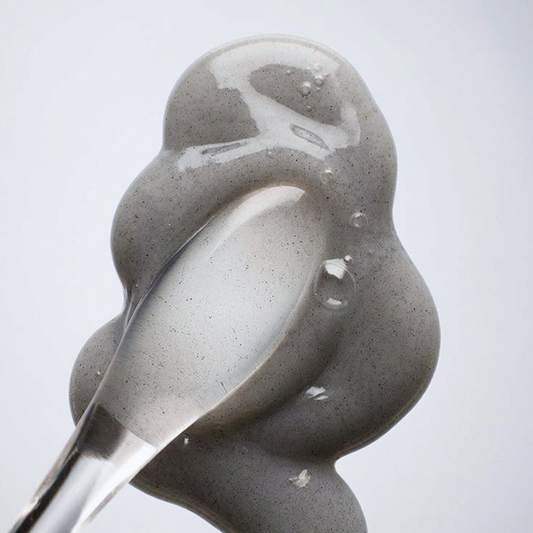
- Finish with a small amount of The Matte Gel with Charcoal . Shine reflects light. A matte finish keeps the focus on your style.
- Wash it out the same day.
On fine hair, less is more.
What's in The Good Sea Salt Spray
The Good Sea Salt Spray is formulated by a certified hair loss specialist and professional stylist. It gives lift and texture at the roots with Epsom salt. No drying alcohol, no silicones, no synthetic fragrance.
"It does not dry out my scalp, and no itchiness." — Brad S.
Want the full routine in one box? The Scalptures™ Starter Kit brings our styling essentials together.
Voted Best Natural & Organic Products, Readers' Choice Awards 2026, Expat Living magazine.
FAQ
-
Does hair spray cause hair loss?
No study has shown that styling sprays directly cause hair loss. Hair in the comb after a stiff hold is often breakage. Wash product out the same day. -
Is sea salt spray bad for thinning hair?
Not in itself. It's a popular way to add lift to fine hair. Check the label for drying alcohol, use it sparingly at the roots and wash it out the same day. -
Is "alcohol-free" the same as "no drying alcohol"?
Close, but not identical. "Alcohol-free" usually means no ethyl alcohol, and fatty alcohols such as cetearyl alcohol are still allowed. Check the ingredient list for drying alcohols such as alcohol denat. or SD alcohol.